

Six Sigma Green Belt (SSGB™) course focuses on providing students with an understanding of the various Six Sigma tools and techniques. These tools and techniques are useful in improving the production process and help to minimize defects in the end product. This course lays greater emphasis on the practical implementation of these tool and techniques in the organization. Exam Format Multiple Choice 90 questions per exam One mark awarded for every right answer No negative marks for wrong answers Duration of 120 minutes Online proctored exam Current pass rate: 98%

The third-generation technology of UMTS continues to play an important part in the global communication landscape and the delivery of mobile broadband services. In this short course, we aim to provide a comprehensive introduction into UMTS and in so doing, provide an overview of the architectural view of UMTS and explain how it supports circuit switched voice and packet switched data traffic. Mobility is also discussed in addition to how roaming is supported. Finally, interworking with both 2G and LTE will be discussed, with a brief focus on Circuit Switched Fallback.

With the continuing role out of 5G, the second generation technologies of GSM and GPRS still play an important part in the global communication landscape. In this short course, we aim to provide a comprehensive introduction into the two systems and in so doing, explain how they support circuit switched voice and packet switched data traffic. Mobility is discussed in addition to reviewing how roaming is supported for both GSM and GPRS.

Stress has a detrimental effect on performance, it makes people behave inappropriately. In order to cope well at work, skills are needed to learn how to respond well to these difficult situations.

Organizational leadership is a management approach in which leaders help set strategic goals for the organization while motivating individuals within the group to successfully carry out assignments in service to those goals. The course opens by exploring the key leadership skills and how to apply them in the organization. Using this initial analysis, the seminar explores managing yourself as a leader, leading a team, creating breakthroughs through innovative leadership, communicating effectively with others and imparting leadership values to your team members. All participants will return to their organizations better equipped to meet the challenges and demands of leadership.

Conflicts arise constantly in the workplace and the inability to come to a resolution can often lead to violence in the workplace with devastating results. It’s true that unmanaged conflicts and disagreements can harm important working and personal relationships. When managed effectively, conflict can actually promote cooperation and build stronger relationships. This training course offers practical tips for managing conflict at work and introducing an effective conflict management strategy. Also, you will learn proven strategies that work in a variety of conflict situations from minor disagreements to potentially explosive confrontations. The long-term result for your organization will be less stress, improved teamwork, and cooperation, and increased productivity.

Customer service is the act of taking care of the customer’s needs by providing and delivering professional, helpful, high-quality service and assistance before, during, and after the customer’s requirements are met. This highly interactive customer service training course is designed to provide the foundation for quality customer service and focuses on building life-long customer relationships strategies.

So many soft skills seem like common sense at first glance, but they are not commonly applied by most workers. This soft skills training course will give you an edge over your competitors. It will also make your job, your career, and your life more rewarding and enjoyable. This soft skills training course will teach you how to develop the skills that can make the difference between an unsatisfactory career that tops out at middle management versus one that lands you in the executive suite. Or wherever you define career success.

A teamwork environment promotes an atmosphere that fosters friendship and loyalty. These close-knit relationships motivate employees in parallel and align them to work harder, cooperate, and be supportive of one another. This training course has been designed to enable you to learn and practice the art of building & forming strong and healthy relationships that will lead to cooperation and collaboration with those you interact with.

This interactive training course provides an excellent overview of developing a strategic plan and covers the end-to-end strategic business planning lifecycle. You will learn how to formulate a vision/mission, undertake strategic analysis (using internal and external logic), set objectives and KPIs, make decisions, and develop themes for the implementation of a corporate business plan. You will learn how to combine the individual components of analysis, formulating, and planning strategy. This business planning course will give you a ‘joined-up view’ of how the strategic process should work, underpinned by a large selection of tools, techniques, and frameworks that will help you tailor a plan to your organizational needs.

This workshop explores how emotional intelligence (EI) gives leaders a competitive advantage. Learn how it can encourage innovation, accountability, and amazing client service in your organization. Leaders with advanced emotional intelligence have a head start in their lives and careers. They inspire passion and enthusiasm, take action to solve problems, and cope better with change and stress. Similarly, Emotional intelligence is often what differentiates good leaders from great leaders. What kind of leader are you? Use emotional intelligence to improve your leadership and relationship management skills.

One of the most repeated phrases you will hear in offices up and down the country is “we don’t have enough time” – to which the response is often “work harder!” – Leading to overtime, stress – and often a poorly done job! Developing techniques to make more intelligent use of time, and to prioritize and effectively manage a challenging workload can lead to a more productive workforce getting more important work done in less time and with less stress! Time management training courses will help delegates increase work effectiveness and productivity, achieve greater control of your daily activities, and overcome stress.
This CCNP training course ultimately aims to upgrade the existing networking knowledge of students. Training covers information on the use of advanced routing in implementing scalability for Cisco routers connected to LANs and WANs. By attaining this impressive certification, it demonstrates an extensive networking skillset, which can be applied to a number of professional IT roles like a Network Engineer, Support Engineer, Systems Engineer, or Network Technician. Furthermore, the information imparted on this Cisco training course will provide delegates with a lasting understanding, as the core skills acquired will enable them to adapt to any changes that may occur over time.
CCNA certification proves you have what it takes to navigate the ever-changing landscape of IT. CCNA exam covers networking fundamentals, IP services, security fundamentals, automation and programmability. Designed for agility and versatility, CCNA validates that you have the skills required to manage and optimize today’s most advanced networks. The CCNA training course and exam give you the foundation to take your career in any direction. When you certify with Cisco, you are living proof of the standard and rigor that businesses recognize and trust to meet and exceed market demands.

Expert Scrum Master Certified (ESMC™) certification is the next step for Scrum practitioners to further demonstrate their expertise in the Scrum framework. Expert Scrum Master Certified practitioners demonstrate their ability to manage complex Scrum projects and scale Scrum to large project teams, programs, and portfolios. Applicants will be awarded the Expert Scrum Master Certified (ESMC™) certificate by SCRUMstudy™ upon successfully passing the certification exam.

The Chief Product Owner makes the day-to-day business decisions in the case of large projects with numerous Scrum Teams and multiple Product Owners. The Chief Product Owner prepares and maintains the overall Prioritized Product Backlog for the large project, using it to coordinate work through the Product Owners of the Scrum Teams. The Chief Product Owner will be responsible for the final deliverable of the project. Apart from making final business decisions, the Chief Product Owner collaborates with the Chief Scrum Master, other Product Owners, and Scrum Masters to develop a list of components and resources needed in common for all the teams throughout the project. Applicants will be awarded the Scaled Scrum Product Owner Certified (SSPOC™) certificate by SCRUMstudy™ upon successfully passing the certification exam.

Scaled Scrum Master Certified (SSMC™)Large projects require multiple Scrum Teams to work in parallel. The Chief Scrum Master is responsible for coordinating activities of multiple Scrum Teams to develop potentially shippable product increments/deliverables. The Chief Scrum Master fosters collaboration and coaches others with the implementation of Scrum for a smooth delivery of the project’s products. Apart from clearing impediments and ensuring a conducive project environment for the Scrum Teams, the Chief Scrum Master collaborates with the Chief Product Owner, other Scrum Masters, and Product Owners in activities such as developing the list of components and resources needed in common for all teams throughout the project. Successful candidates will be awarded the Scaled Scrum Master Certified (SSMC™) certification by SCRUMstudy™ after passing the certification exam.

The Product Owner represents the interests of the stakeholder community to the Scrum Team. The Product Owner is responsible for ensuring clear communication of product or service functionality requirements to the Scrum Team, defining Acceptance Criteria, and ensuring those criteria are met. The Product Owner must always maintain a dual view. He or she must understand and support the needs and interests of all stakeholders, while also understanding the needs and workings of the Scrum Team. Applicants will be awarded the Scrum Product Owner Certified (SPOC®) certificate by SCRUMstudy™ upon successfully passing the certification exam.

Rapid changes in technology, market demands, and expectations have paved the way for the conceptualization and implementation of Agile methods and values in many organizations. Agile relies on adaptive planning and iterative development and delivery. It focuses primarily on the value of people in getting the job done effectively. SAMC™ Certified Professionals should appreciate the concepts of Agile development and have the ability to compare and choose the Agile methodology appropriate in a given situation. Applicants will be awarded the SCRUMstudy Agile Master Certified (SAMC™) certificate by SCRUMstudy™ after successfully passing the certification exam.
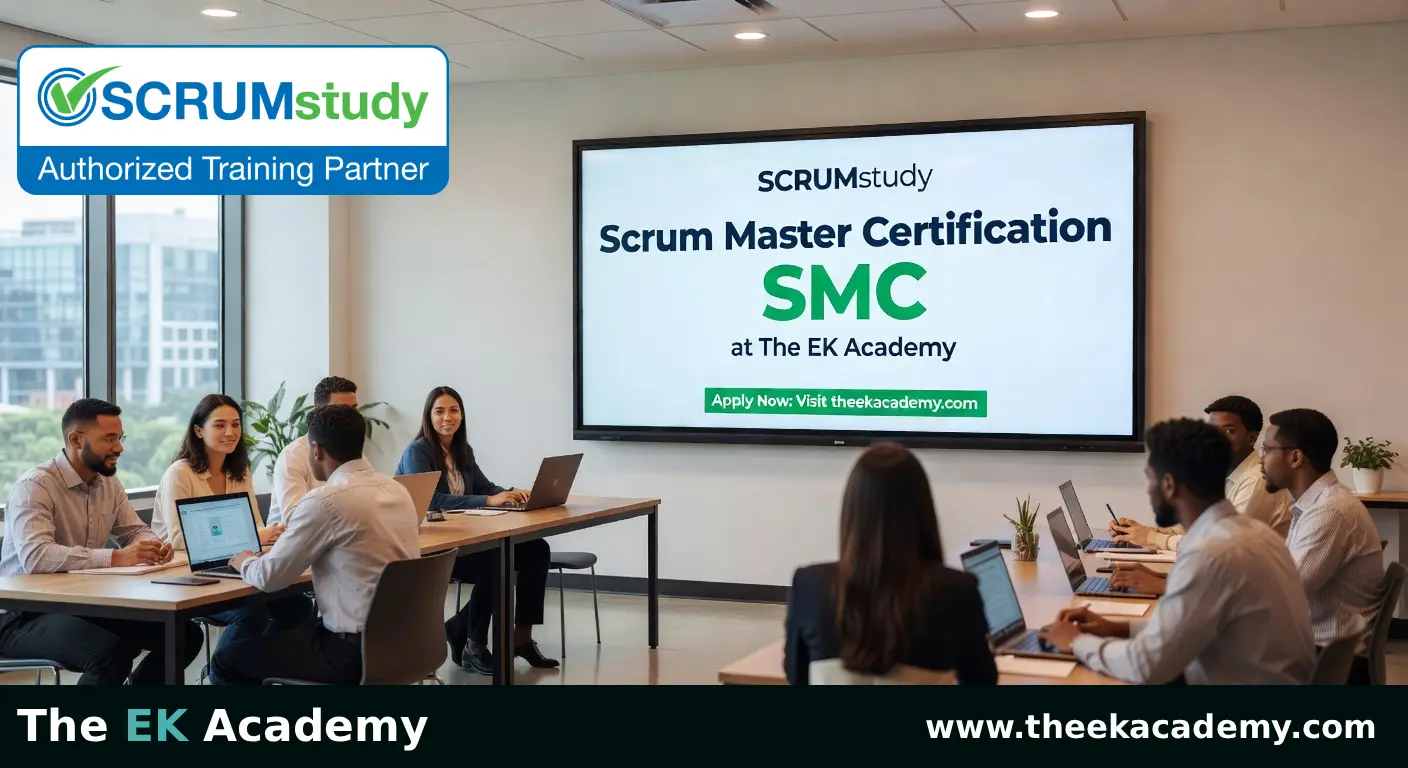
Scrum Master Certified (SMC®) professionals are facilitators who ensure that the Scrum Team is provided with an environment conducive to completing the project successfully. The Scrum Master guides, facilitates, and teaches Scrum practices to everyone involved in the project; clears impediments for the team; and, ensures that Scrum processes are being followed. Successful candidates will be awarded the Scrum Master Certified (SMC®) certification by SCRUMstudy™ after passing the certification exam.

Scrum Developer Certified (SDC®) is an entry level certification for Scrum Team members and those who interact with any Scrum Team. The objective of this certification is to ensure that Scrum Team members know enough about Scrum to effectively contribute to a Scrum project. The courseware and preparation tools required for the certification exam will be available online on SCRUMstudy.com. An online proctored exam will be conducted at the end of the course.

The Scrum Fundamentals Certified (SFC™) course is tailored to help anyone interested in learning the basics of Scrum. This course is included as a part of a Primary lifetime membership. The purpose of the Scrum Fundamentals Certified (SFC™)’ certification exam is to confirm participants have a fundamental understanding of the Scrum methodology.
This course presents the VoLTE/SRVCC signalling for the voice service. It is designed for participants that will work with traces from the IMS/VoLTE networks. The EPS and IMS network architecture and procedures for the voice service in VoLTE solution will be presented, on a level allowing understanding and analyzing SIP and Diameter traces from a VoLTE environment. The course includes the enhanced SRVCC solution with the ATCF/ATGW deployment. A significant part of the time will be devoted to hands-on exercises with Wireshark-based traces, with focus on the messages and parameters for the VoLTE-specific traffic cases.
The course explains SIP (Session Initiation Protocol), describes the IMS nodes and architecture and how LTE/EPS serves as an IP-CAN (IP Connectivity Access Network) as described in 3GPP specifications and GSMA (GSM Association) documents. The course also outlines the role of Application Servers in IMS, and how IMS interworks with other networks, e.g. for fixed and mobile traditional circuit switched telephony. Throughout the course, message-level signalling flows are shown to illustrate various traffic cases, procedures and scenarios.
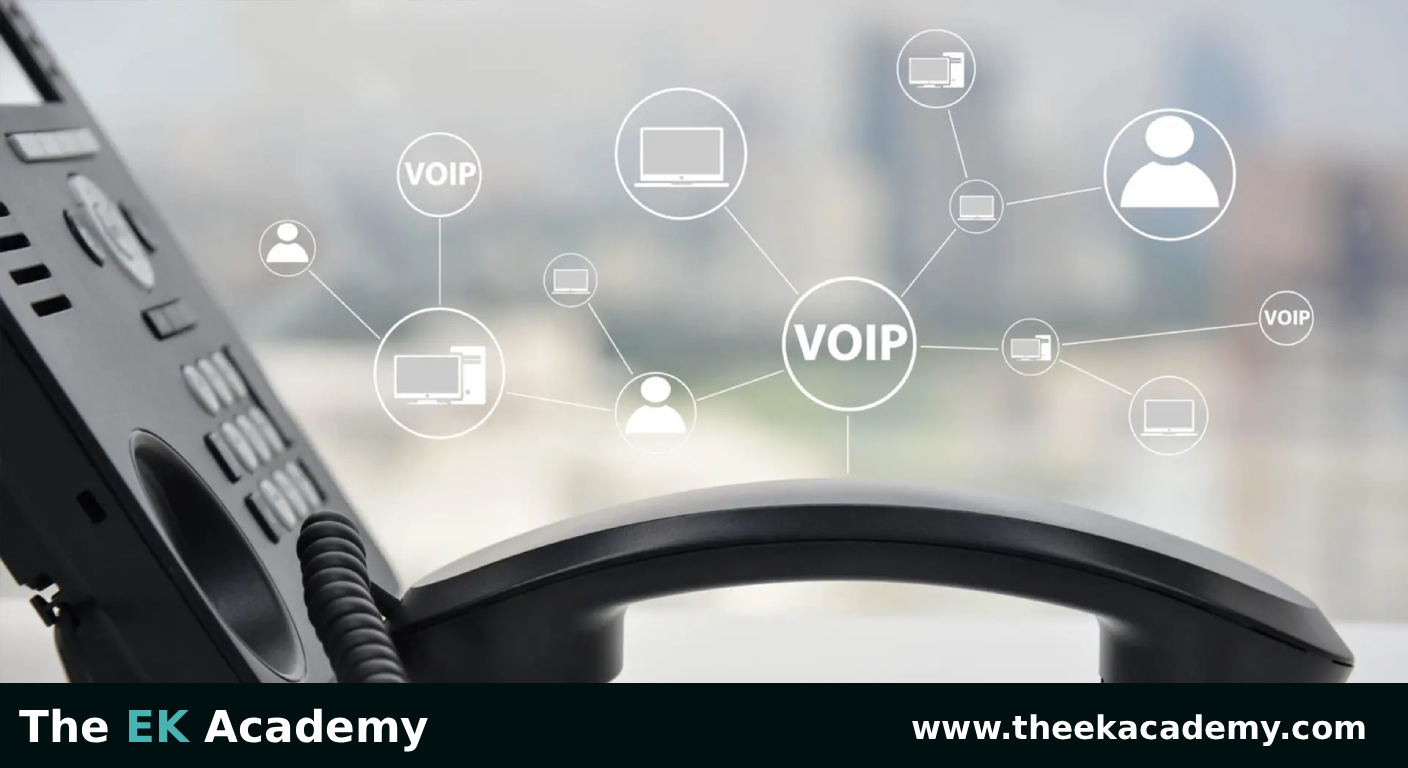
You will learn how SIP works within IP-telephony, as well as multimedia solutions, such as presence and Instant Messaging (IM). This course will cover how SIP works both in wireline and wireless solutions and you will need basic knowledge within VoIP and SIP to participate in this course. This is a theoretical training with practical exercises.
As telecommunications evolves and becomes increasingly pervasive in society, cybersecurity will need constant vigilance. Security in the era of 5G is going to require continuous assessment and mitigation to ensure that all vulnerabilities and threats are managed proactively. It is important to that we look at security holistically from local to international, from operations to supply chain and dependencies. This 3-day course is focused providing tools to understand, assess and mitigate the threats and vulnerabilities within a holistic view as Security is all encompassing.

Most industrialists today wonder how artificial intelligence (AI) is likely to upset their economic model. It must be said that the latest advances in this area: Chatbots, translation automated in real time, Robotic Process Automation and Machine Learning, just to name a few, are showing promise. They open the field of possibilities in matters of applications and new services. These are some of the advances that the telecommunications industry should benefit from. All over the world, large operators invest a lot of money and mobilize their researchers to benefit from advances in AI. This course will help you understand the challenges of artificial intelligence in telecoms, show you some of the key concepts of artificial intelligence and show you how to better identify the different possible applications of AI in telecoms. You will also discuss advanced methods of statistical learning to solve artificial intelligence issues, how to use neural networks and associated architectures, design and analyze experiences to evaluate systems HRI (Male Interaction – Robot). You should be able to understand how AI can help improve surveillance of production machines, preventing the failure of equipment by using concepts such as predictive maintenance and automatic resolution incidents or “self-healing”.
In this course you will learn how to build, compose, deploy and manage Docker containers with Kubernetes, to understand the purpose and theory of Kubernetes, and how to run and manage your containerized applications.

The 3GPP Mobile Systems Overview course describes four generations of 3GPP systems from the voice-centric GSM via UMTS to later developments such as high-speed Mobile Broadband, LTE, IMS, VoLTE and the emerging 5G System. All topics are presented in a comprehensive – yet easily understandable – way. Essential subsystems, nodes and procedures are described. Basic traffic cases are used to demonstrate the function and architecture of the systems.
The main objectives of MEC are: optimization of mobile resources by hosting compute-intensive applications, pre-processing of the large data before sending it to the cloud, enabling cloud services within the close proximity of mobile subscribers, and providing context-aware services with the help of radio access network information. In doing so, MEC enables a wide variety of applications, e.g. where real-time responses are strictly required, e.g. applications for driverless vehicles, virtual reality and augmented reality (VR/AR), robotics, and immerse media. ETSI ISG officially changed the name of mobile edge computing to mean multi-access edge computing in 2017.
In order to provide the general context the course briefly introduces the overall roles of all the major 5G Network Functions (NFs), and the outline of the basic 5G traffic cases – the 5G Registration and PDU Session Establishment. The course focuses on the 5G Policy Control Function (PCF), explaining the Policy Control model used to enforce both the subscription-specific Access and Mobility Management and the service-specific QoS, routing and charging handling rules. 3GPP definitions for User Plane resources are presented, as well as external AF traffic influencing. A short part on the 5G Charging Control is included.

The training course starts with a brief introduction to the 5G system architecture, various dangers, threats and attack scenarios and short introduction to basic cryptographic techniques used in digital communication. This is followed by a presentation of security requirements on the 5G system and recommendations from various organizations. The next parts of the course present various standardized security mechanisms and their details for securing communication with users/devices, inside the network, towards external entities, and other networks.

The course outlines the O-RAN architecture and terminology, central functions and concepts like SMO, Non-RT RAN Intelligent Controller, Near-RT RAN Intelligent Controller, O-CU, O-DU, O-RU and O-Cloud. Relevant interfaces are described, along with a few simple use case examples. The motives and objectives for Open RAN are outlined, as well as its relationship to technical specifications from e.g. 3GPP, ETSI and IETF.

The course describes the physical layer design of NR in terms of OFDM numerologies, radio frames, subframes and slot configurations. The course explains the purpose of, and processing of, physical channels with particular focus on control channels. Reference signals for data demodulation, CSI measurements, and sounding are explained. Layer 1 procedures for synchronization, random access, scheduling, HARQ, measurements and beam management are described. An overview of the NR RRC and MAC protocols is included in chapter 1 for completeness, with particular focus on the role of the RRC and MAC protocols in relation to layer 1.
Planning, designing and dimensioning comes with its own challenges and Telcos need to be aware of the risks, challenges and opportunities to truly exploit the future of this technology. This 3-day course upskills delegates on the tools and insights needed to prepare for 5G; focusing on how to maximize network capacity, evaluate service quality, optimize usage of radio networks and enhance data transmission.

This course presents the interconnection and interworking procedures between 4G Evolved Packet System and 5G System, as specified in the current R16 3GPP standards. The course focuses on the deployment options, UE capabilities, network features, plus procedures for idle and connected mode device mobility and service continuity in a multi-access environment with 4G/5G core networks and possible inter-RAT dual connectivity scenarios.

The course focuses on the voice/multimedia telephony service under IMS control for networks with 5G deployed. It presents the UE and network features and definitions that guarantee establishment, handling, and service continuity for the telephony service within the 5G ecosystem. Significant parts of the course focus on the interworking between 4G and 5G on the core network and radio network level to support device mobility and service continuity in a multi-access environment.

This course presents the signaling communication within 5G Core Network as specified in the current Rel-16 3GPP standards. In order to provide the general context, the course briefly introduces the network organization, the roles of all the major 5G Network Functions (NFs), the basic 5G use cases (eMBB, mMTC and URLLC), the UE identities, and so on. The course focuses on protocols and signaling procedures inside the 5G Core Network, between the UE and the Core Network and also between the 5G Radio Access Network and the 5G Core Network. The course describes the procedures used in the Standalone 5G Network deployments. The selected signaling procedures are presented on a message parameters level of details with some examples using traces from the 5G network.

We introduce the relevant basics of NG-RAN (Next-Generation Radio Access Network) together with the roles of the various NFs (Network Functions), as defined by current 3GPP R15 standards and emerging R16 additions. The interactions both within the 5GC and between the 5GC and the NG-RAN are also explained.

The course uses a top-down approach starting with a high level description of the functionality of different network entities and the interaction needed between on different interfaces. The layer 3 protocols are then discussed one by one in detail in a logical scenario-based sequence. A number of detailed message-by-message signalling sequences will be presented during the course to tie everything together. Protocols and signalling procedures related to the 5GC-internal Service Based Architecture are mentioned but not covered in any detail.

This course provides a thorough overview of the Next-Generation Radio Access Network (NG-RAN) which is part of the 3GPP 5G System. The focus is on Stand-Alone (SA) operation but also Non-Stand Alone (NSA) NR is outlined. The course starts with a brief introduction to the 5G System, followed by a discussion of aspects of the new radio interface and the nodes, interfaces and procedures in the NG-RAN. The course also describes various RAN – core option and dual connectivity options as well as some NG-RAN implementations such as C-RAN, O-RAN (from O-RAN Alliance) and IAB (Integrated Access and Backhaul).

A 10-day Training Program to provide participants with a strong understanding of Global System for Mobile (GSM) technology, and with the basic knowledge, tools, and methods to plan, design, deploy, and manage GSM networks

The SS7 Signaling in Mobile Networks course explains and describes the world’s most widespread inter-exchange signaling system used in fixed and mobile telecommunication today: Signaling System No 7. It provides the basic ideas and structure of the SS7 protocol stack. Different aspects of various signaling protocols and signaling applications in the telecommunications world are covered. There are a few detailed examples from both mobile and fixed networks. The course focus is on ITU SS7 and GSM/UMTS core network protocols that are based on SS7 system. The participants will also gain a general understanding of how to interpret log files and traces taken from live networks.

LTE, or strictly speaking the Evolved Packet System (EPS), consists of the evolved Radio Access Network (E-UTRAN) and the Evolved Packet Core (EPC) as defined in 3GPP technical specifications. The course focuses on the network architecture, nodes and mode of operation of the entire LTE System. It accounts for interfaces, protocols and services provided by LTE, including Mobile Broadband, VoLTE and IoT. Message-level traffic cases are used throughout the course to demonstrate important functions and concepts.
5G Slicing training can help professionals to build a solid career in Telecom Industry and get the best jobs in top organisations. This course is developed by Industry Expert and covers all relevant concepts so that you can apply them at your Work with ease.
This course explains the basic functions in TCP/IP. The focus on this training is set on the protocols within the architecture TCP/IP. The purpose is to make the participants understand what the different protocols do and to have knowledge of other important functions such as routing and DNS. TCP/IP is a technology used in computers all over the world. This course will give you the fundamental TCP/IP knowledge in order to be able to attend other specific courses in areas such as routing technology, VPN, realtime-IP, QoS and IT-security.

The 5G System Overview provides an overview of the emerging 5G system as defined and standardized by 3GPP, other SDOs (standard development organizations) as well as various industry players and initiatives. The course accounts for the various aspects of the 5G System (Access Network, 5G Core), nodes/functions, interfaces / reference points, basic procedures and main architectural ideas. The course explains concepts important to 5G like NFV/SDN and network slicing, and how these are used to make the 5G System more efficient and flexible than earlier generations of 3GPP networks. The ITU 5G Use Cases (eMBB, URLLC and mMTC) are outlined in terms of services and technical aspects. The course gives an overview of the 5G Radio Access Network including 5G New Radio (NR) and integration with LTE.

This fiber optic course is designed for anyone interested in becoming a Fiber Optic Technician. This Fiber Optic Training combines theory and hands-on activities to equip student to work with optical fiber. This course also introduces the student to industry standards governing FTTD (Fiber to the Desk), FTTH (Fiber to the Home), and Distribution Cabling.
Gain unparalleled knowledge, skills and competency to manage the complex technical environments of a data centre facility and the ability to optimise its effectiveness by driving efficiencies. Create a credible business strategy and apply strong leadership to maximise the operational capability of the data centre whilst continuing to meet the on-going demands of the business. The five-day Certified Data Centre Management Professional (CDCMP®) is a comprehensive program that investigates the functionality of all elements of a data centre facility and the relationships and dependencies between them, with a focus on maintaining consistent reliability, security and integrity of data and the availability of service. Opening with a solid grounding in the basic design principles, the program progresses to provide an overview of the physical infrastructure elements, through to an understanding of the project management methodology required to deliver complex data centre projects. It also explores the efficient management of the often conflicting operational and maintenance demands required of the data centre plant to continuously deliver the business needs. The challenges of regulatory compliance, data centre strategies and audit demands are also thoroughly examined. Real-life case studies are used to demonstrate putting theory into practice. A certified CDCMP® also considers the requirements for compliance, having a full understanding of national and international regulations, codes and standards. During the program, learners will be provided a valuable opportunity to access the latest industry standards.

In order to support the typical data centers and the environment with high availability and quality, this course aims to provide end-to-end coverage of the mission-critical infrastructure fundamentals. It provides professionals to achieve the right skills sets and expertise, not from engineering but also design classification and grading concepts which are driven by the industry best practices. Furthermore, this course also developing experts who can guide and lead the data center industry as architects, consultants and subject matter experts. Additionally, this course helps various stakeholders to increase their investments leading to the reliability, higher availability, efficiency, safety, security and capacity at an optimized cost.

Human Resources Management (HRM) is the process of shaping employment relationships in organizations, taking the individual employee level as a starting point. Strategic human resources management focuses primarily on strategy and HR policy issues at the organizational level. This 5-day course will help you learn about the tools and techniques used in drafting and developing HR strategies. During this course, you delve into the principles and applications of theories of public management and strategic HRM. It will also equip you with the knowledge and skills you need to translate such strategies into actions.

The domain of HR innovation with topics ranging from people analytics to enhancing the employee experience with design thinking principles are especially important in the constantly changing, challenging business environment of our age. This training course addresses pressing issues and challenges around how to manage virtual teams and leverage technology to attract and retain a productive workforce. It is a great launch point for any leader interested in elevating HR to a more strategic and innovative business function at the heart of an organization.

Employee Relationship Management involves managing the relationship of each employee with the organization and with each other. Employee Relations influences every HR decision made in an organization. The techniques in this training course will enable the creation of a working environment in which all staff is able to contribute their full potential. This will involve creating a supportive and trusting climate at work and ensuring that individual and collective ER issues are handled positively and sensitively.

Developing and maintaining a competitive advantage is one of the key challenges faced in the current business environment. Leaders and managers need to create a sustainable environment in which valuing and developing talent is second nature. These concepts must become embedded in the culture of the organization in order for it to succeed. This in-depth development course will provide participants with the knowledge and tools required to create and manage a successful talent management strategy.

What motivates employees in an organization? Why are they having good or bad moods? How can this be improved? To answer these questions we need to combine the fields of Psychology, Sociology, and Business Administration – and so Organisational Behavior arises. Researchers and practitioners provide us with an intense amount of beautiful concepts that allow us to understand members of the organization much better. This course covers the full scope or Organisational Behavior divided into three main areas. We focus on individuals in organizations, groups in organizations, and organizations as a whole.

Performance Management is ensuring that the employee and the organization are focused and aligned towards strategic priorities. This training course will show you how to integrate Performance Objectives, Critical Success Factors, and Key Performance Indicators into a performance management system applied by a highly skilled leadership, managerial, and supervisory team. This will enable the top-performing companies to not only develop future and existing leaders but also formulate robust performance management processes. This includes regular performance reviews and detailed appraisals, merit-based reward and recognition, staff development aligned with business needs, and defensible approaches to low or non-performance.

A properly designed and effective performance management process will require a range of techniques including agreeing objectives, reviewing and monitoring performance, giving feedback, coaching, training, and development, and reward and of the seminar, appraisal itself. This course will demonstrate how these techniques link to the role of HR and the role of the line manager.

HR administrators and officers are constantly requested to expand their existing knowledge and skill set. This course has been developed to enrich the HR professionals’ knowledge in the areas of organizational structures, organizational systems, HR reporting, legal documentation, and employee policies. In addition, the course provides an extensive body of knowledge on the competencies required for successful HR administrators.

This course uses a straight forward methodology which combines the explanation of the HC plan components reaching at the end of the course to a real HC Plan that will be assessed and evaluated. Also, individual exercises, team exercises, and case studies will be used in this course.

Unlock the full potential of your organization’s HR data by becoming an HR Data Analyst and learning practical data analysis skills.

This Balance Scorecard training course provides you with relevant knowledge on how to develop and implement a Balanced Scorecard System. Balance Scorecards course offers a comprehensive overview on the many benefits any organization can extract from the Balanced Scorecards implementation.

This five days course will help you to thoroughly understand all the issues of using and building a Voice over IP Network. We will cover the reasons for using the VoIP technology and we will cover the fundamental of the signaling protocol SIP. SIP is certainly an extensible protocol but all the details are moved to the course SIP Advanced. Already in this course, you will get the fundamentals and a good view into SIP and a good understanding regarding its possibilities. After this training, the students will understand the basic mechanisms of SIP they will also get a good platform for further studies into SIP, such as the course SIP Advanced.
Become a CISSP – Certified Information Systems Security Professional Accelerate your cybersecurity career with the CISSP certification. Earning the CISSP proves you have what it takes to effectively design, implement and manage a best-in-class cybersecurity program. With a CISSP, you validate your expertise and become an (ISC)² member, unlocking a broad array of exclusive resources, educational tools, and peer-to-peer networking opportunities. Prove your skills, advance your career, help earn the salary you want and gain the support of a community of cybersecurity leaders here to support you throughout your career

The Mini MBA course is the perfect programme for managers with non-managerial backgrounds that want to boost their career and become a great “All-Round Manager”. Through this intensive project course, you experience real-world situations in which your recommendations and decisions impact the outcome of your project. You also develop a toolkit of templates and productivity tools for use back at work.
The Project Management Professional (PMP)® is the world’s leading project management certification. Now including predictive, agile and hybrid approaches, the PMP® proves project leadership experience and expertise in any way of working. It supercharges careers for project leaders across industries and helps organizations find the people they need to work smarter and perform better. In this course, you will apply the generally recognized practices of project management acknowledged by the Project Management Institute (PMI)® to successfully manage projects. Additionally, this course can be a significant part of your preparation for the PMP certification exam. The exam must be booked separately through the Project Management Institute (PMI)®.

In this course, you’ll explore why creativity and innovation are more important for businesses today than ever before. You’ll examine why and how leading-edge companies have turned conventional business culture models on their heads through embracing creativity and how to protect your organization from being disrupted or left behind in a rapidly evolving business climate. You’ll learn how to create a cultural environment that fosters creativity, including creativity blocks to avoid, like micromanaging and an over-emphasis on efficiency, and how to establish an idea-response system for your managers, in order to encourage the open the sharing of ideas. Plus, you’ll find out why a creative corporate culture is a key to attracting and retaining great talent, increasing morale and productivity, and ultimately you’re company’s bottom line.