

Showing 16 Courses

$99.00
The third-generation technology of UMTS continues to play an important part in the global communication landscape and the delivery of mobile broadband services. In this short course, we aim to provide a comprehensive introduction into UMTS and in so doing, provide an overview of the architectural view of UMTS and explain how it supports circuit switched voice and packet switched data traffic. Mobility is also discussed in addition to how roaming is supported. Finally, interworking with both 2G and LTE will be discussed, with a brief focus on Circuit Switched Fallback.
$99.00
$99.00
With the continuing role out of 5G, the second generation technologies of GSM and GPRS still play an important part in the global communication landscape. In this short course, we aim to provide a comprehensive introduction into the two systems and in so doing, explain how they support circuit switched voice and packet switched data traffic. Mobility is discussed in addition to reviewing how roaming is supported for both GSM and GPRS.
$99.00
$99.00
This course presents the VoLTE/SRVCC signalling for the voice service. It is designed for participants that will work with traces from the IMS/VoLTE networks. The EPS and IMS network architecture and procedures for the voice service in VoLTE solution will be presented, on a level allowing understanding and analyzing SIP and Diameter traces from a VoLTE environment. The course includes the enhanced SRVCC solution with the ATCF/ATGW deployment. A significant part of the time will be devoted to hands-on exercises with Wireshark-based traces, with focus on the messages and parameters for the VoLTE-specific traffic cases.
$99.00
$99.00
The course explains SIP (Session Initiation Protocol), describes the IMS nodes and architecture and how LTE/EPS serves as an IP-CAN (IP Connectivity Access Network) as described in 3GPP specifications and GSMA (GSM Association) documents. The course also outlines the role of Application Servers in IMS, and how IMS interworks with other networks, e.g. for fixed and mobile traditional circuit switched telephony. Throughout the course, message-level signalling flows are shown to illustrate various traffic cases, procedures and scenarios.
$99.00
$99.00
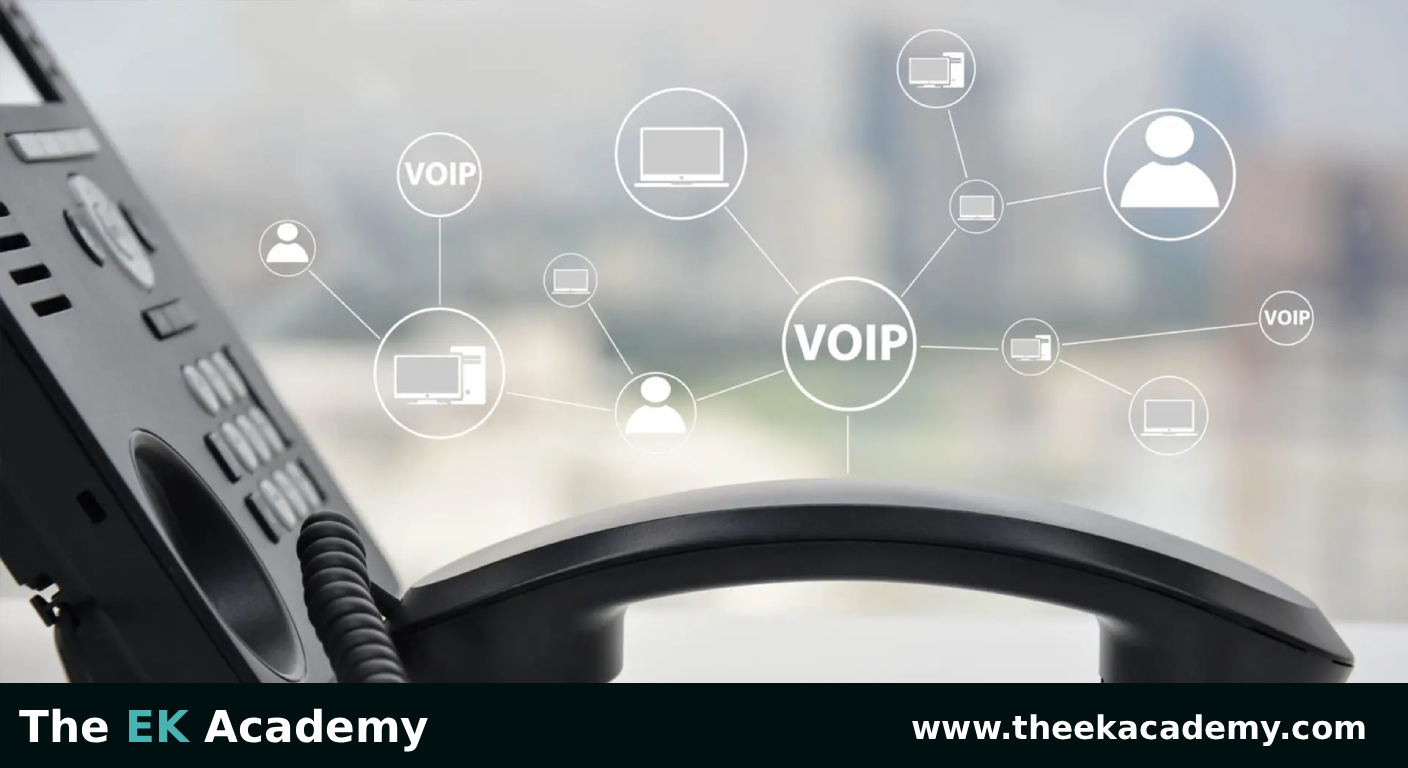
You will learn how SIP works within IP-telephony, as well as multimedia solutions, such as presence and Instant Messaging (IM). This course will cover how SIP works both in wireline and wireless solutions and you will need basic knowledge within VoIP and SIP to participate in this course. This is a theoretical training with practical exercises.
$99.00
$99.00
As telecommunications evolves and becomes increasingly pervasive in society, cybersecurity will need constant vigilance. Security in the era of 5G is going to require continuous assessment and mitigation to ensure that all vulnerabilities and threats are managed proactively. It is important to that we look at security holistically from local to international, from operations to supply chain and dependencies. This 3-day course is focused providing tools to understand, assess and mitigate the threats and vulnerabilities within a holistic view as Security is all encompassing.
$99.00

$99.00
Most industrialists today wonder how artificial intelligence (AI) is likely to upset their economic model. It must be said that the latest advances in this area: Chatbots, translation automated in real time, Robotic Process Automation and Machine Learning, just to name a few, are showing promise. They open the field of possibilities in matters of applications and new services. These are some of the advances that the telecommunications industry should benefit from. All over the world, large operators invest a lot of money and mobilize their researchers to benefit from advances in AI. This course will help you understand the challenges of artificial intelligence in telecoms, show you some of the key concepts of artificial intelligence and show you how to better identify the different possible applications of AI in telecoms. You will also discuss advanced methods of statistical learning to solve artificial intelligence issues, how to use neural networks and associated architectures, design and analyze experiences to evaluate systems HRI (Male Interaction – Robot). You should be able to understand how AI can help improve surveillance of production machines, preventing the failure of equipment by using concepts such as predictive maintenance and automatic resolution incidents or “self-healing”.
$99.00
$99.00
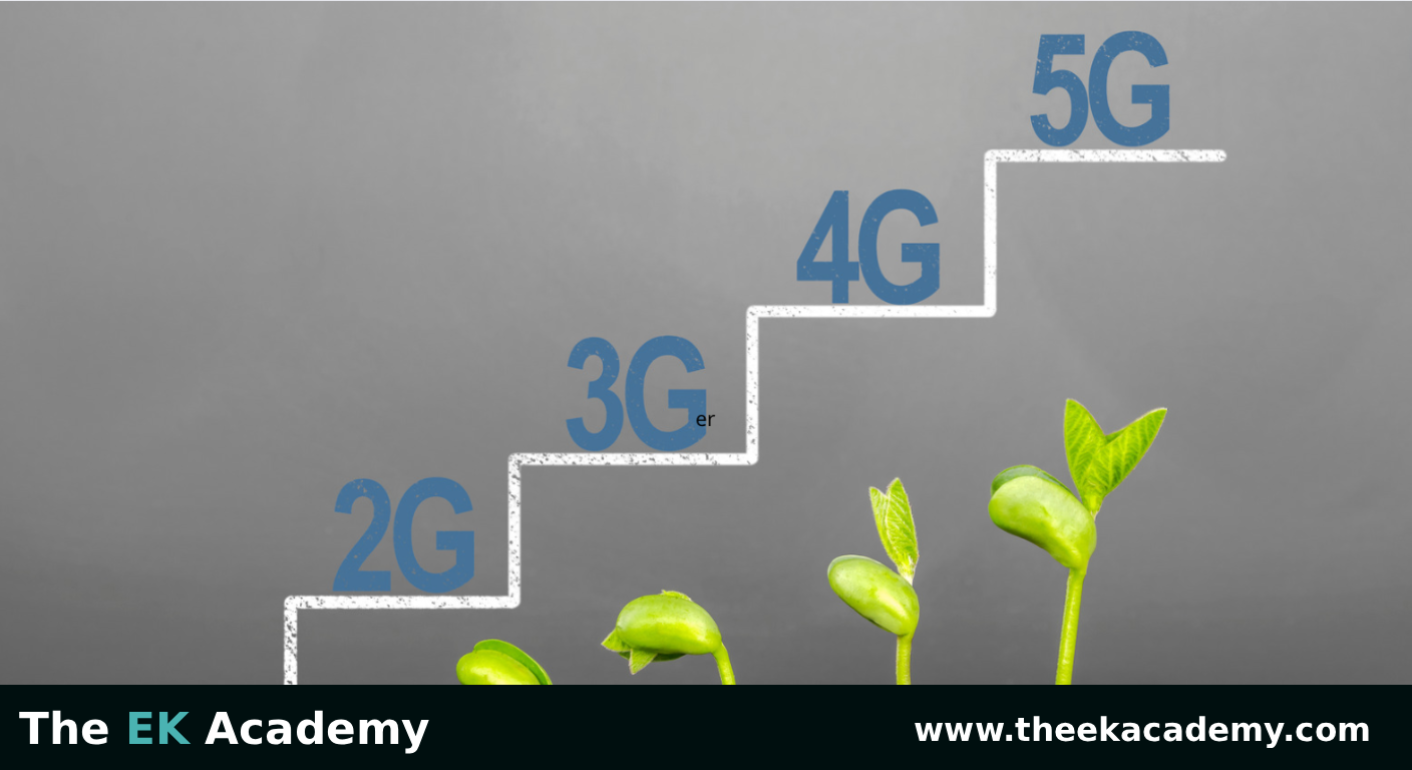
The 3GPP Mobile Systems Overview course describes four generations of 3GPP systems from the voice-centric GSM via UMTS to later developments such as high-speed Mobile Broadband, LTE, IMS, VoLTE and the emerging 5G System. All topics are presented in a comprehensive – yet easily understandable – way. Essential subsystems, nodes and procedures are described. Basic traffic cases are used to demonstrate the function and architecture of the systems.
$99.00
$99.00
The main objectives of MEC are: optimization of mobile resources by hosting compute-intensive applications, pre-processing of the large data before sending it to the cloud, enabling cloud services within the close proximity of mobile subscribers, and providing context-aware services with the help of radio access network information. In doing so, MEC enables a wide variety of applications, e.g. where real-time responses are strictly required, e.g. applications for driverless vehicles, virtual reality and augmented reality (VR/AR), robotics, and immerse media. ETSI ISG officially changed the name of mobile edge computing to mean multi-access edge computing in 2017.
$99.00
$99.00
In order to provide the general context the course briefly introduces the overall roles of all the major 5G Network Functions (NFs), and the outline of the basic 5G traffic cases – the 5G Registration and PDU Session Establishment. The course focuses on the 5G Policy Control Function (PCF), explaining the Policy Control model used to enforce both the subscription-specific Access and Mobility Management and the service-specific QoS, routing and charging handling rules. 3GPP definitions for User Plane resources are presented, as well as external AF traffic influencing. A short part on the 5G Charging Control is included.
$99.00

$99.00
The training course starts with a brief introduction to the 5G system architecture, various dangers, threats and attack scenarios and short introduction to basic cryptographic techniques used in digital communication. This is followed by a presentation of security requirements on the 5G system and recommendations from various organizations. The next parts of the course present various standardized security mechanisms and their details for securing communication with users/devices, inside the network, towards external entities, and other networks.
$99.00
$99.00
The course outlines the O-RAN architecture and terminology, central functions and concepts like SMO, Non-RT RAN Intelligent Controller, Near-RT RAN Intelligent Controller, O-CU, O-DU, O-RU and O-Cloud. Relevant interfaces are described, along with a few simple use case examples. The motives and objectives for Open RAN are outlined, as well as its relationship to technical specifications from e.g. 3GPP, ETSI and IETF.
$99.00
$99.00
The course describes the physical layer design of NR in terms of OFDM numerologies, radio frames, subframes and slot configurations. The course explains the purpose of, and processing of, physical channels with particular focus on control channels. Reference signals for data demodulation, CSI measurements, and sounding are explained. Layer 1 procedures for synchronization, random access, scheduling, HARQ, measurements and beam management are described. An overview of the NR RRC and MAC protocols is included in chapter 1 for completeness, with particular focus on the role of the RRC and MAC protocols in relation to layer 1.
$99.00

$99.00
The course focuses on the voice/multimedia telephony service under IMS control for networks with 5G deployed. It presents the UE and network features and definitions that guarantee establishment, handling, and service continuity for the telephony service within the 5G ecosystem. Significant parts of the course focus on the interworking between 4G and 5G on the core network and radio network level to support device mobility and service continuity in a multi-access environment.
$99.00

$99.00
This course presents the signaling communication within 5G Core Network as specified in the current Rel-16 3GPP standards. In order to provide the general context, the course briefly introduces the network organization, the roles of all the major 5G Network Functions (NFs), the basic 5G use cases (eMBB, mMTC and URLLC), the UE identities, and so on. The course focuses on protocols and signaling procedures inside the 5G Core Network, between the UE and the Core Network and also between the 5G Radio Access Network and the 5G Core Network. The course describes the procedures used in the Standalone 5G Network deployments. The selected signaling procedures are presented on a message parameters level of details with some examples using traces from the 5G network.
$99.00
$99.00
We introduce the relevant basics of NG-RAN (Next-Generation Radio Access Network) together with the roles of the various NFs (Network Functions), as defined by current 3GPP R15 standards and emerging R16 additions. The interactions both within the 5GC and between the 5GC and the NG-RAN are also explained.
$99.00